Beyond access management
Providing access isn't enough anymore - organizations need to understand how that access is being used and identify anomalous behavior. While Boundary had established itself as a powerful solution for secure access to dynamic infrastructure, security teams were still relying on separate tools for monitoring and investigation, which are required for some of our biggest customers. This created workflow friction and missed opportunities for deeper security insights.
We saw an opportunity to expand Boundary's role beyond basic access management through conversations with customers and market analysis. By taking a design-led approach to session recording and monitoring, we could make sophisticated security workflows more accessible while positioning Boundary as a comprehensive platform for infrastructure security. Most importantly, if this feature existed but was difficult to use, that would create a significant hurdle in getting teams to take security seriously.
Elevating design's impact
When I joined Boundary in 2021, the product was being run primarily by Engineering and Product Management, with design notably absent from strategic planning. I worked to elevate design's role, ensuring we had an equal voice in roadmap planning and strategy discussions. As the team grew from one to three designers, I implemented a philosophy I've used successfully in early-stage design teams: developing broad product knowledge before specializing.
This approach proved particularly valuable for complex features like session recording. Each designer could contribute meaningful feedback across the entire user journey, having deep context about both access workflows and security requirements. We became equal partners in the Boundary Leadership Team (BLT 🥪), helping shape not just design execution but product strategy and direction.
Understanding investigation workflows
Rather than simply matching competitor features, we needed to understand the complex needs of incident response teams. I developed a comprehensive research plan combining qualitative interviews and detailed metrics. We conducted several major studies throughout the year, carefully crafting interview questions to dig deep into specific features while gathering broader insights about security workflows.
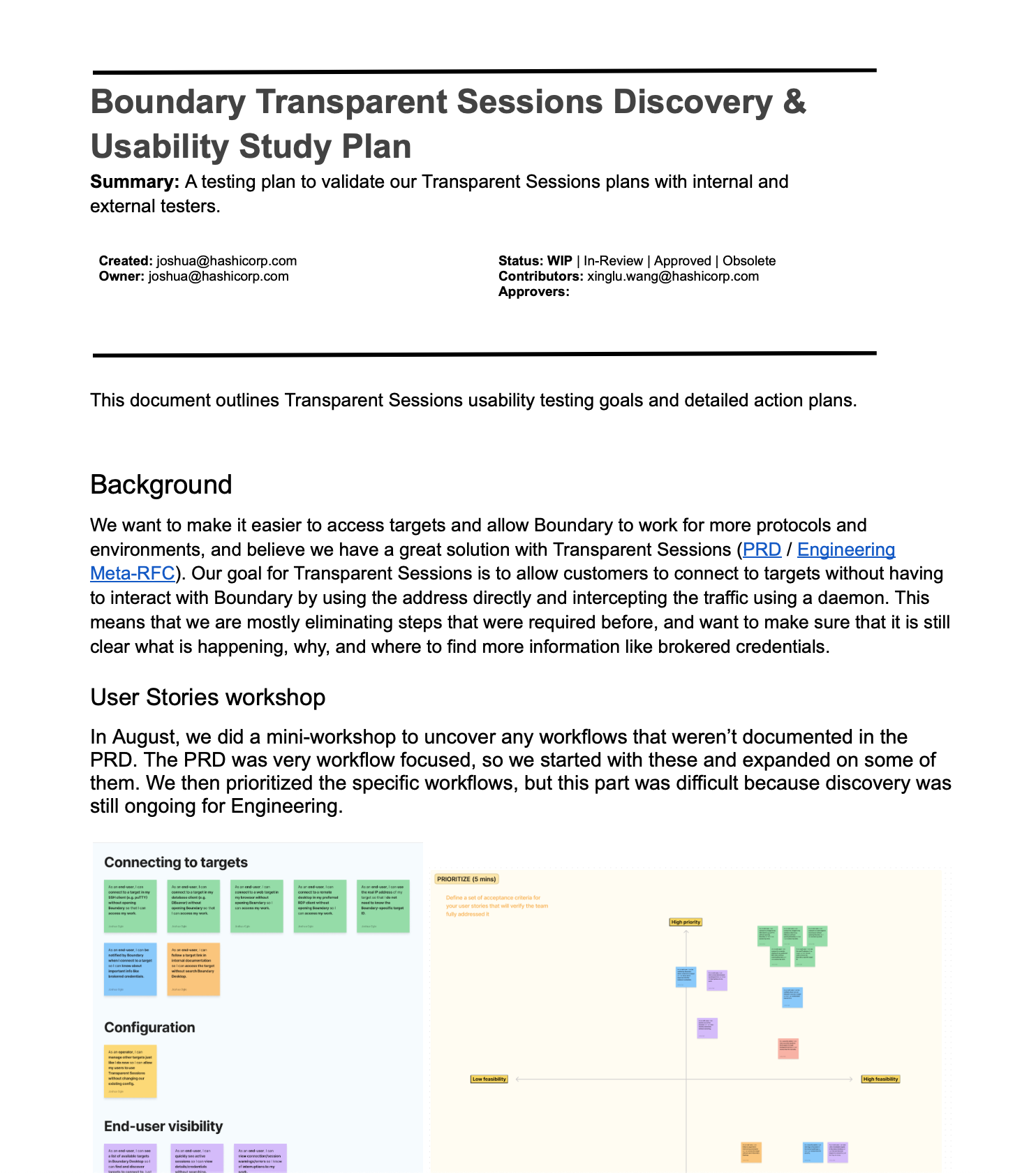
Our research revealed how incident response teams work like detectives, following trails of activity across their infrastructure. They need to expand their investigation by examining other targets that share credentials, tracing user activities across systems, and analyzing patterns that might indicate a breach. Most critically, they need to correlate seemingly unrelated events that could reveal a larger security incident. These insights pushed our strategy beyond basic recording functionality to build tools supporting sophisticated investigation workflows.
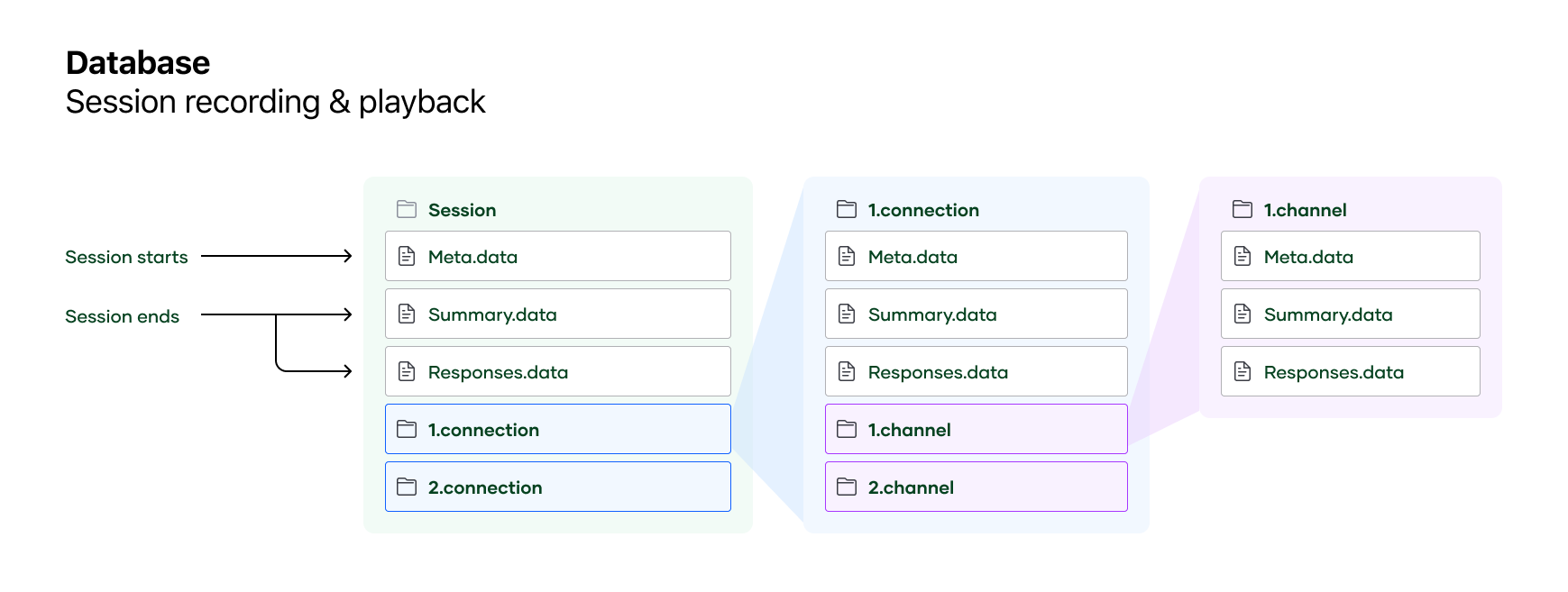
We would also need a new recording file format, based on the SSH protocol which is highly detailed and convoluted. We needed to be able to recover the recording even if disconnected in the middle of a session. There are a lot of things that can go wrong during SSH sessions and we needed to handle them gracefully and explain to the users what happened and support playback for partial recordings when possible. I helped with these discussions to think through edge cases and learn more about the SSH spec.
From conversation to innovation
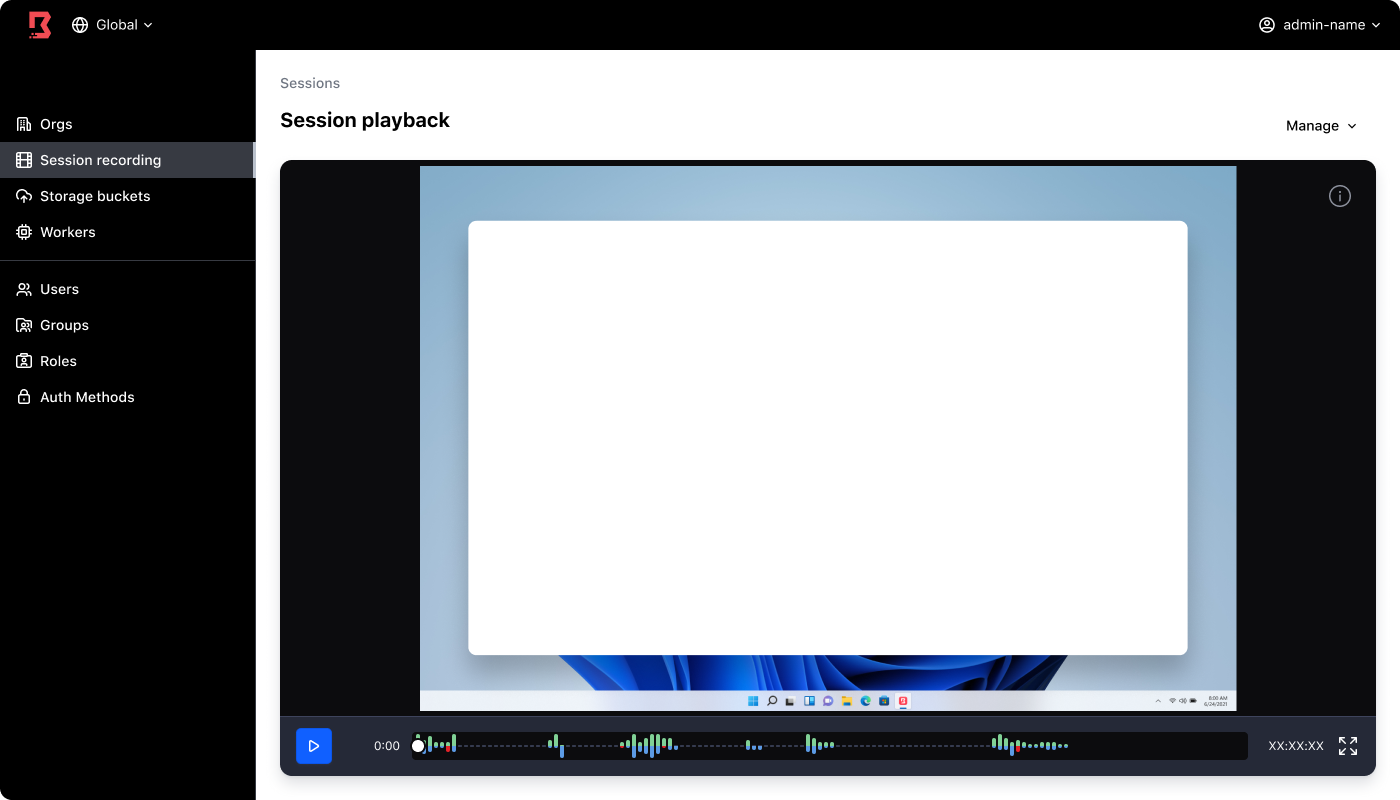
Sometimes the best design solutions come from unexpected moments. During a cab ride to the airport after an offsite meeting, our backend lead and I found ourselves brainstorming ways to help users identify patterns in session activity. As engineers and designers often do, we started nerding out about data visualization possibilities. This impromptu conversation led to our most innovative feature - a waveform timeline visualization that would transform how teams analyze session recordings, helping them gain insights our competitors haven't yet explored.
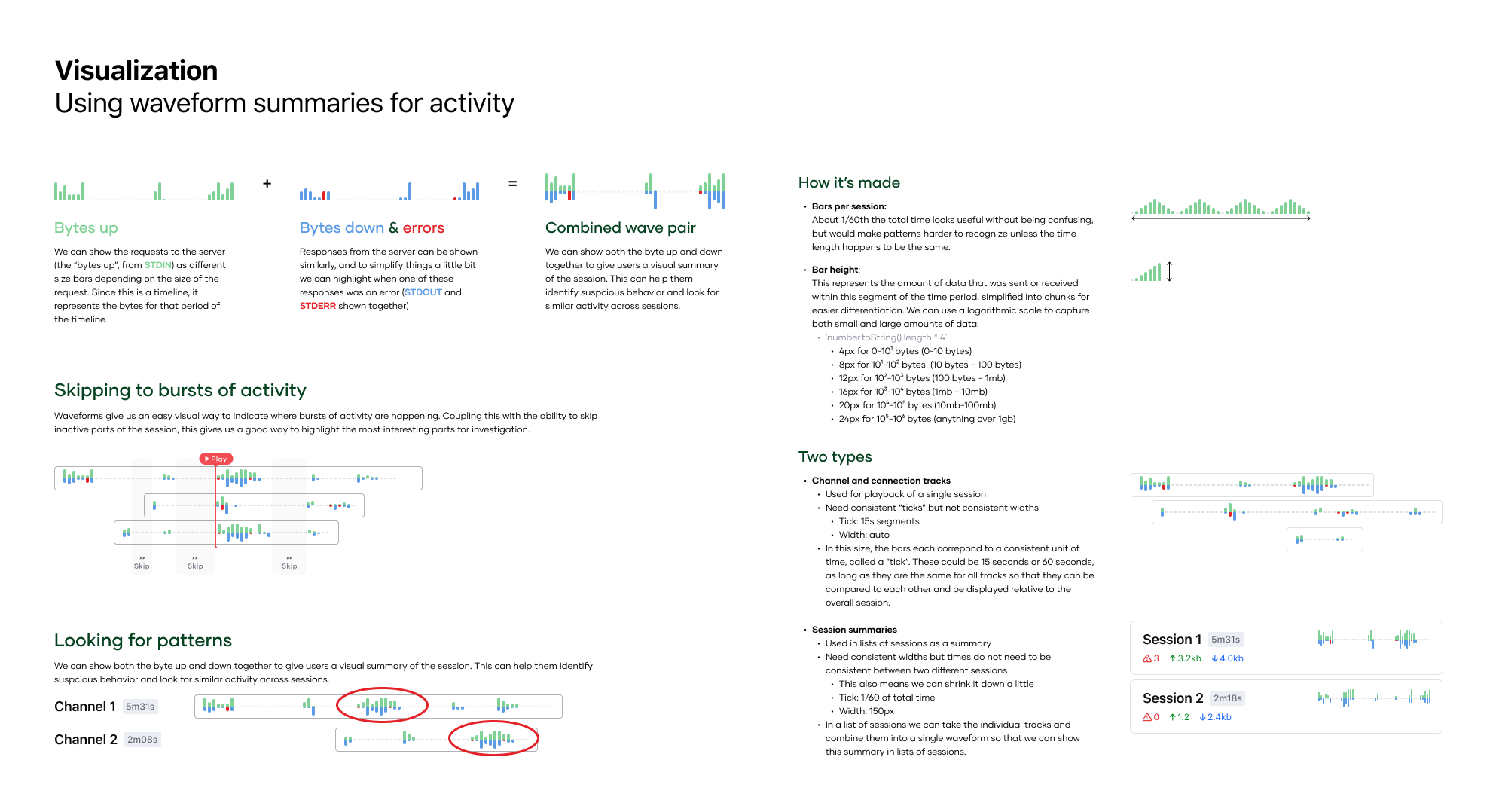
The waveform concept was more than just a visual flourish. It was a whole new way to represent what happened during a session at a glance, allowing the investigators to move quickly and find related patterns at a glance. This collaboration exemplified how cross-functional partnerships can lead to solutions that go beyond what competitors offer, creating unique value for our users.
Leading market growth
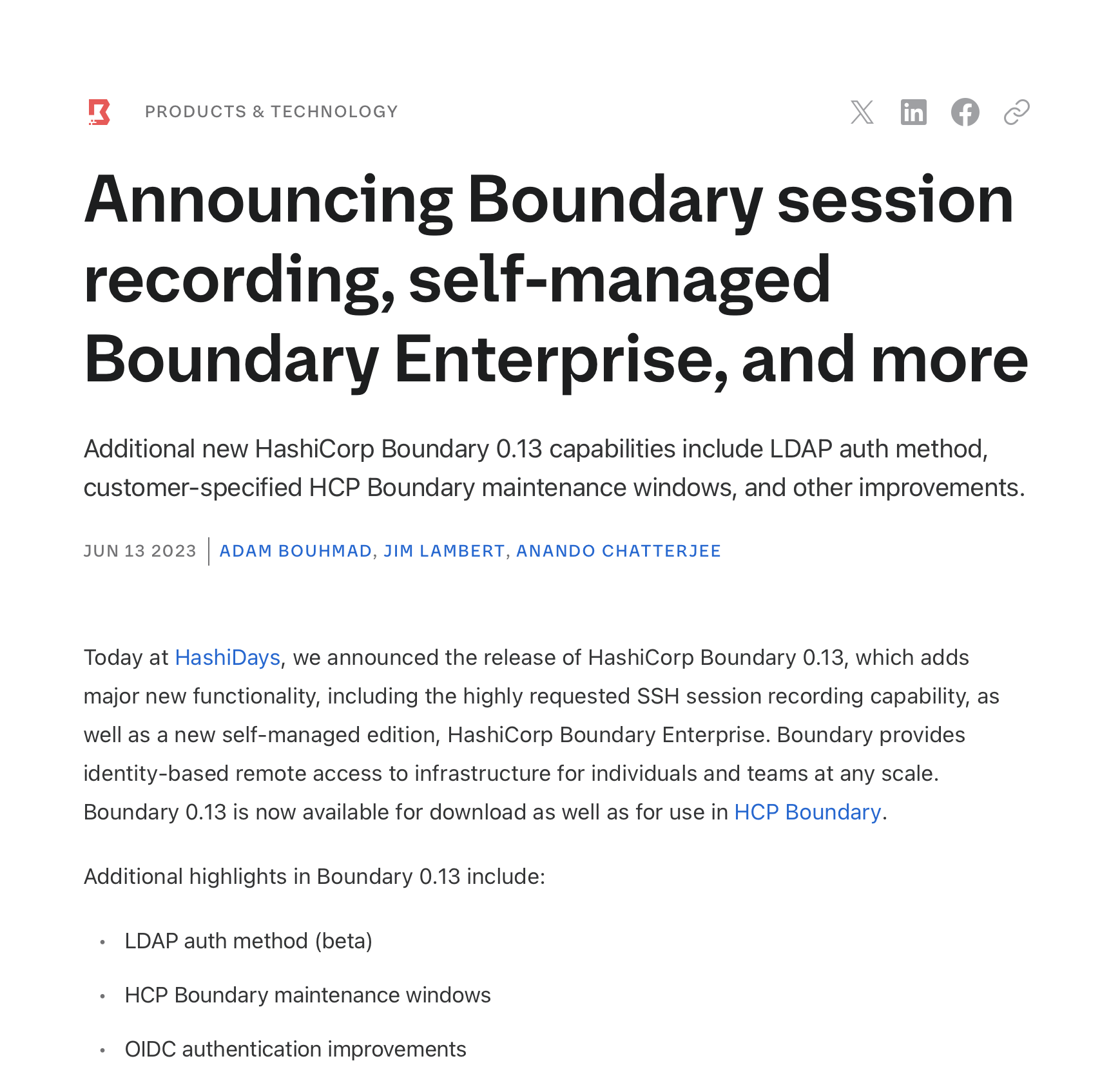
The session recording feature has transformed Boundary's market position, helping us achieve recognition in Gartner's PAM category. We've attracted major enterprise customers including several big banks and organizations like Takeda Pharmaceuticals and DuckDuckGo. These customers are scaling Boundary in ways we never anticipated, pushing us to prepare for even broader market adoption.
Most significantly, Boundary has become a "deal leader" for HashiCorp's product suite. Its approachable design makes it an excellent entry point for teams just starting with dynamic infrastructure who might not yet need Vault or Terraform. From a design leadership perspective, this demonstrates how our user-centered approach shapes not just product features, but company strategy.
Scaling for tomorrow
Our research revealed numerous opportunities to enhance investigation workflows, and we continue gathering insights as customers push the boundaries of what's possible with session recording. We're seeing patterns in how organizations scale their access management, bringing on more simultaneous users connecting to an ever-expanding set of targets.
This feature's success has influenced our broader product strategy, showing how Boundary can serve as an entry point for organizations beginning their journey into dynamic infrastructure while scaling to meet sophisticated enterprise security needs. This positions us perfectly for the next phase of growthas more organizations adopt dynamic infrastructure and need comprehensive security solutions that are both powerful and approachable.