Who designs the design system?
I joined HashiCorp as the 2nd product designer to help make sense of their massive (and massively popular) developer tools. They already had several successful products, had strong investment, and were growing fast. We knew we would soon be joined by lots of new designers and so keeping things documented and organized was important. We also believed that time invested in a design system pays off. Time spent on a design system really is saved when you don't have to reinvent the button. I led our Design System Working Group at HashiCorp, a thriving collaborative that included designers from all of our products.
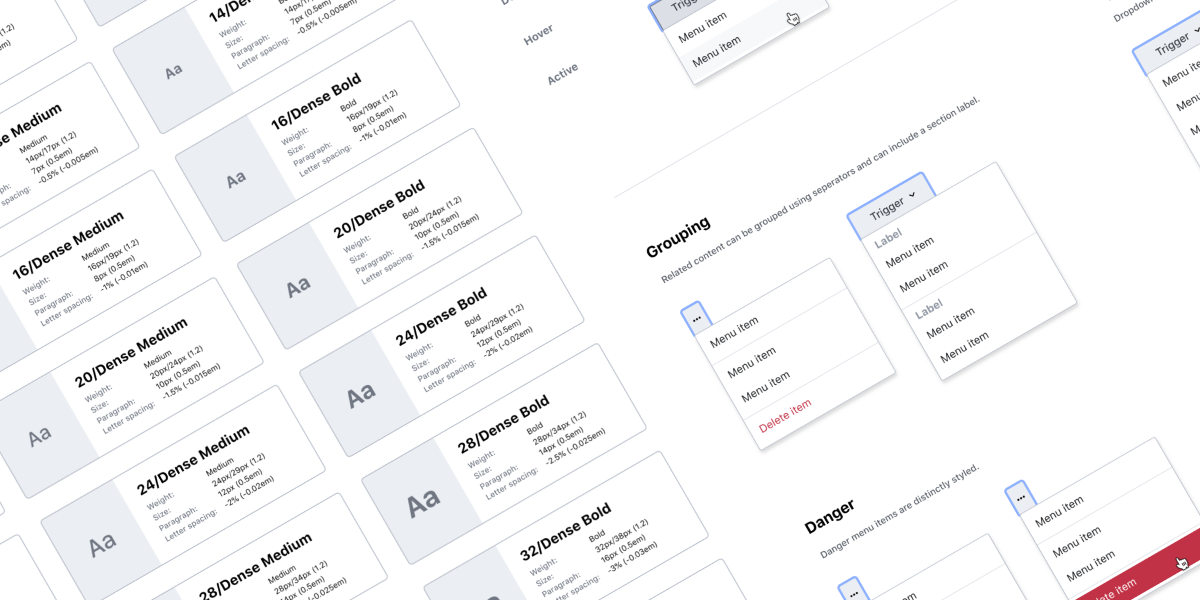
When most people think of design systems they picture colorful grids of buttons and nitpicky guidelines, but they're really made up of long noisy meetings full of collaboration, long comment threads, and friendly debate.Design systems are living things, and only grow and survive if they are nurtured.
Principles come included
The new Design System Working Group met biweekly. Because the product roadmaps always came first, and we were building the foundations ad hoc, we had to make the most of our time together. I knew I had to remove any and all obstructions that might prevent a designer from contributing whatever time they could. Questions and ideas came up throughout the week which were answered in Slack, and would add their longer topics to the agenda for the next biweekly meeting. We would start with these first to ensure that if we ran out of time on the housekeeping items, then we would have still made the best use of the time. I could chase down the status updates in Slack later if it meant we were having discussions and making decisions as a team. So collaboration was easy thanks to talented designers having a sense of ownership because they really had it.
Grassroots and growth
I led our new Design Systems Working Group, where the design team worked together to craft and define our visual language and rules.
The family of products that we were designing for do very different things ranging from secrets management to mesh networking and deployment automation, but at the end of the day they're still interfaces for complicated infrastructure management. That means the vast majority of our design patterns for listing, creating, and managing resources can be shared and improved together. Our design system would have to span 6 enterprise products with more coming soon. We would need a tiered design system, one that could be used by all of the products and also ensure that we could start components in our individual products and then work on standardizing them without risking their committed work for their product.
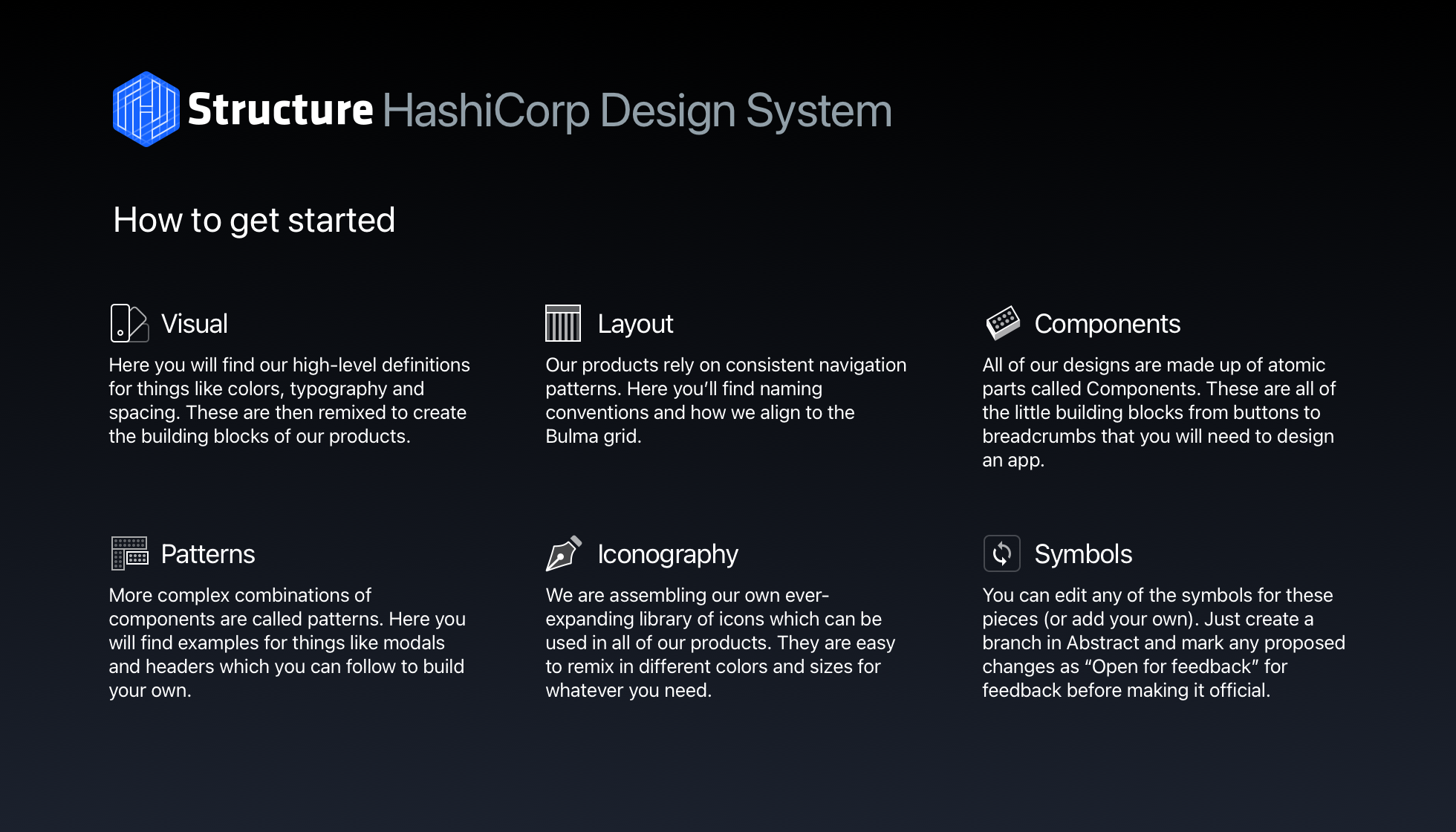
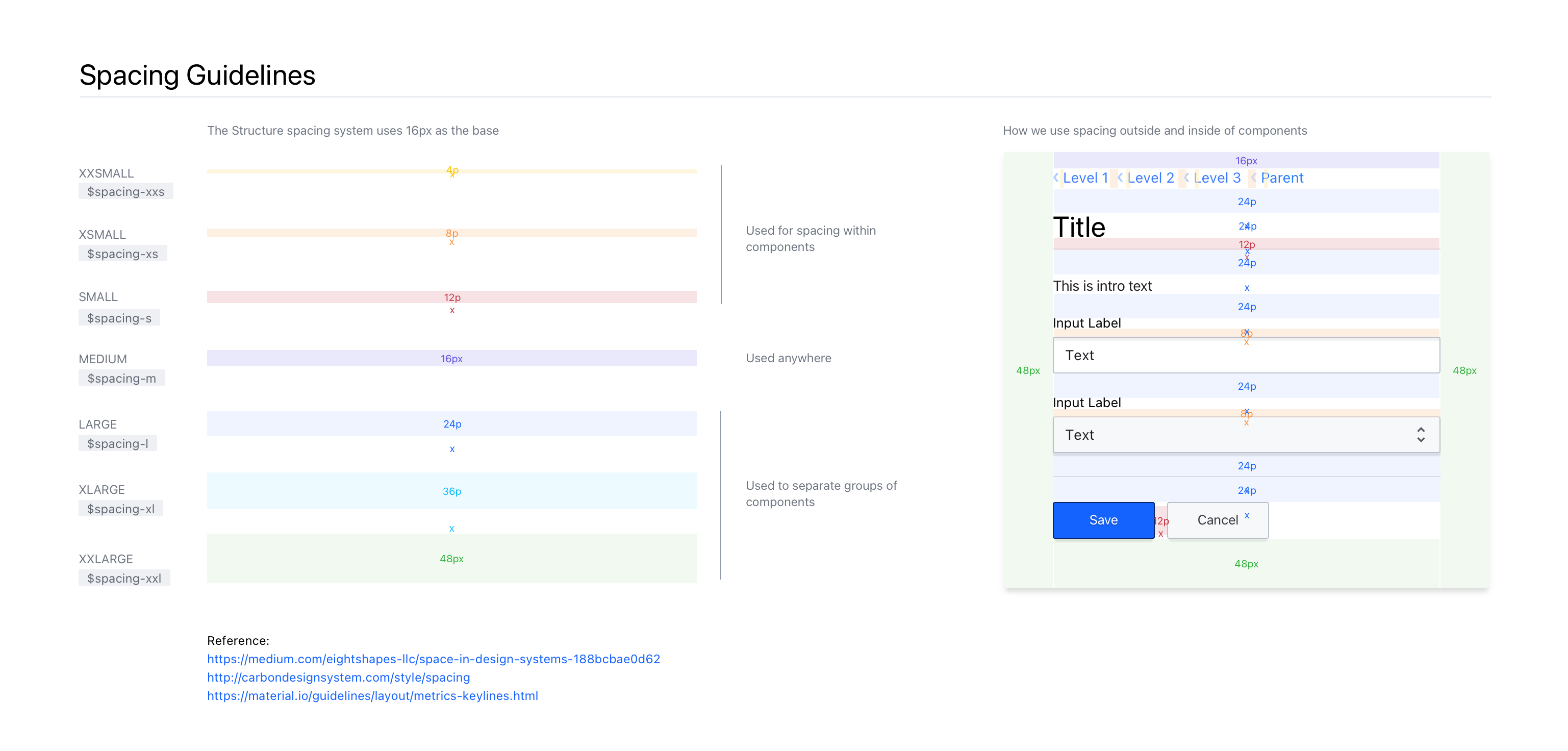
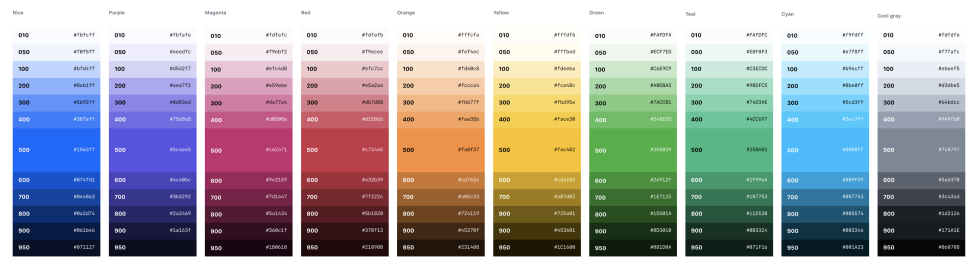
Product designers are either naturally pragmatic or they soon learn to be. They are beholden to the realities of product development roadmaps that demand all of their time, and don't get to do everything with the craft and rigor that they would like. I drafted a collaboration model that focused on making it as easy as possible to contribute so that we could make progress while still delivering each of our roadmaps.
Components would start in their own files that inherited from Structure. Each team was responsible for maintaining these libraries, for instance the Vault and Consul teams had their own component libraries where they could experiment and get feedback. This helped them move quicker and could develop it in the context of their product and could move as quickly as they needed to. The larger products that had two or three designers also got practice building and sharing their own components together, bringing some of these questions to the larger working group. If a designer needed something that didn't exist yet, they could build their own out of simpler components and if it seemed useful, other interested designers collaborated to bring it into the design system.
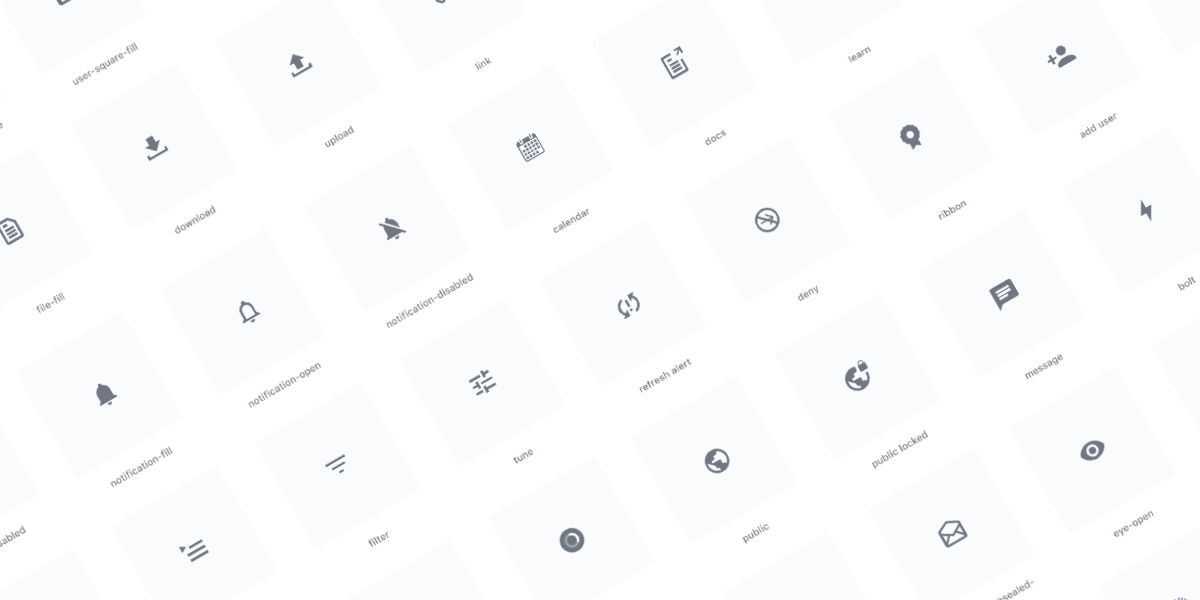
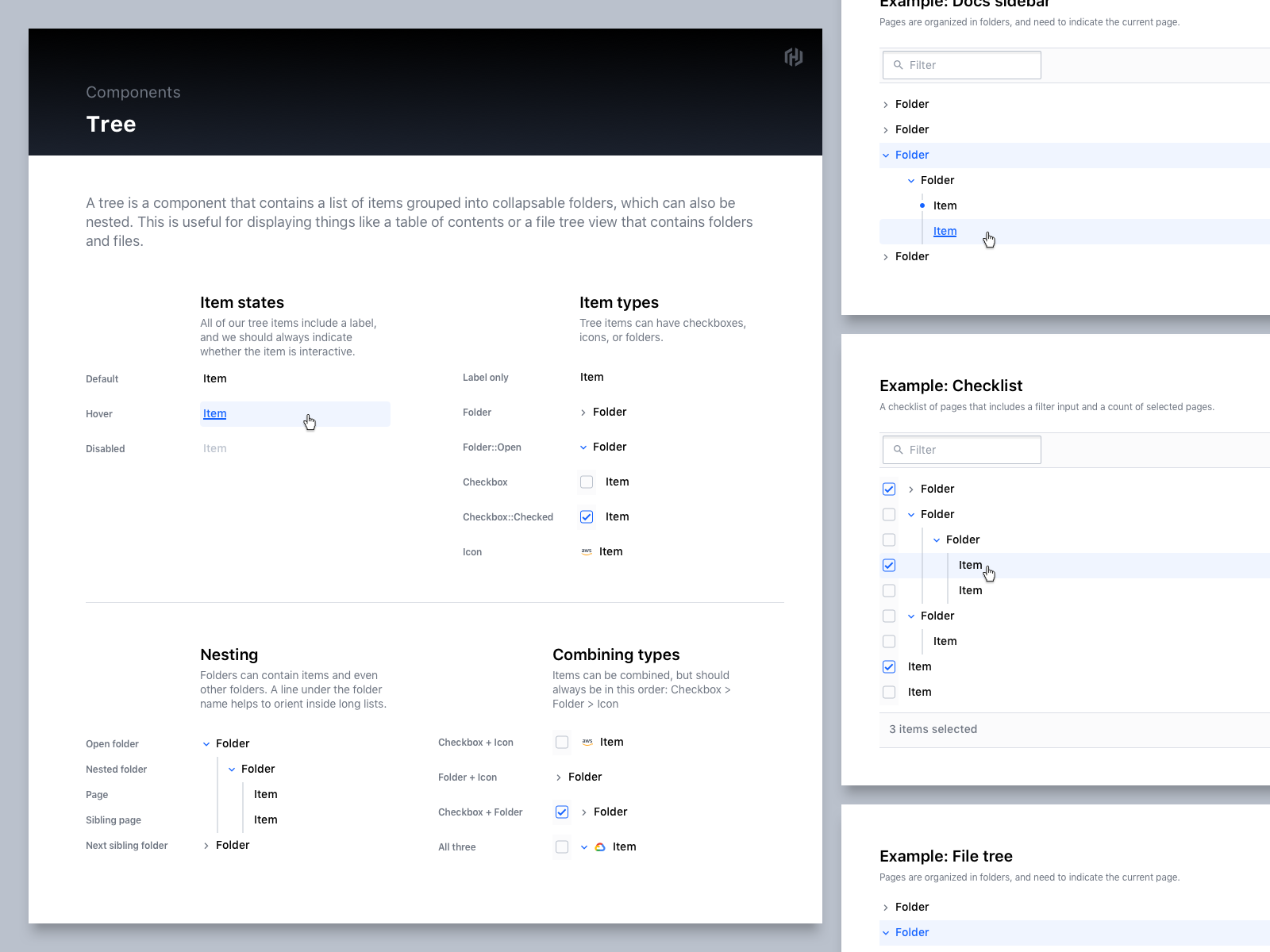
HashiCorp creates developer tools and has a culture centered around craft and documentation built by developers who care a lot about their tools. Our designers were no different, so we paid close attention to how the component felt to use and how it worked with everything else in the system. When a component was needed by a second product, we invested the time to review and migrate it to the shared design system. Structure grew to over 30 shared components, not counting the many more that were in the individual products. We proposed, reviewed, and debated every step as a team and our system was better for it.
Migration
In 2020, after two years of using Sketch, we decided to migrate to Figma. Figma was becoming very popular and it was easy to see why. The focus on collaboration would make it much easier to work together and with our product and engineering partners. I conducted a detailed comparison of our options, and included other tools like Adobe XD for good measure. Switching would mean losing our version control system, the key to treating the design system like code, but the benefits of collaboration would make collaboration and review much easier. I led the effort to rebuild our design system in Figma while our team continued to use Sketch, taking time out of my own product work to get all 300 components migrated with some improvements like autolayout and component variants to make maintaining things easier.
There would be a small learning curve for some of our designers, so I hosted a walkthrough and Q&A session where I slowly walked through the new system including putting together a full screen design. Even designers with Figma experience found this useful for learning some of these new features. We were now starting already oriented toward collaboration, and as a bonus we got the designers using the features that would save them time every day. Migrating tools is an big investment both in time and energy, so use it as an opportunity to teach best practices that will make a meaningful difference. You don't have to think of every detached component as a crime, but using the design system as a highly crafted example of best practices can help designers learn how to use the tool and make the most of it.
All good things…
Just like users of a product, the designers are the ones who should be driving every decision. The processes of using, adding to, or changing the design system have to be as easy as possible, because once it becomes a burden they will naturally do more things without it and the design system will rot. Don't let that happen! Contributing must feel like a natural part of their design process. Make sure that the team is engaged and heard, making decisions democratically, and getting quick answers to their requests. Provide good reasoning in your documentation and presentation of the design system also helps designers learn from each other and raises the bar for everyone.

This grassroots approach worked well until we grew big enough to convince leadership to invest in a full-time team. Structure was sunset in 2024. The HashiCorp Design System Team now includes designers and engineers, working full-time on our new design system called Helios. As design systems have become a standard for product design, so too have accessibility standards and a shared community of people who care about this side of the craft. I'm proud of the work we did on Structure and the team that created it, and I'm just as proud of the Helios team now.
So that's the story of a design system from beginning to end and I have a lot of thoughts on how I would do it all again. But my best advice is from the things that we did right. If you have a design team with up to twenty designers, make sure you are focusing on collaboration and inclusion. Let the design system be the best example of how you craft processes and workflows, and listen to the designers who are using it.